Choose swimwear that resists saltwater fading by picking polyester-rich or PBT-rich fabrics, ideally above roughly 70% polyester or PBT, in mid-to-dark colours. Rinse in cool fresh water within an hour of swimming and dry flat in shade, since salt crystals, UV and sunscreen residue together drive saltwater fading.
UV exposure does the deepest damage, with sunscreen residue second and salt the least destructive.
PBT and polyester resist fading best because their tightly packed polymer structure takes up dye deeply.
Double-stitched seams, lined fronts and tight-knit fabrics reduce the abrasion that lets salt crystals work in.
Rinse in cool fresh water within the hour, before the suit dries, and no detergent is needed for a light swim.
Never wring or twist, and never hang a one-piece by the straps, which stretches them out.
Tired of swimwear fading by February?SBYT makes beach-inspired pieces designed to hold colour and shape through real summers.
Why Saltwater Fades Swimwear (and What Actually Causes It)
Saltwater fading is the gradual loss of colour in swimwear caused by a combination of salt crystals, UV radiation and chemical residue, and it rarely comes from salt alone. Most fading is a care problem as much as a fabric problem. Below, we break down the causes and show you how to prevent swimsuit fading so your pieces hold their colour season after season.
Separating Salt, Sun and Sunscreen Damage
Three culprits work together, and most swimmers blame the wrong one. Salt crystals dry into the fibre and abrade it as you move, sunlight breaks down dye molecules, and sunscreen residue traps oils that dull colour. The salt is the least destructive of the three. UV exposure does the deepest damage, and sunscreen comes second. If you rinse after every swim and dry in shade, you remove two of the three threats in under a minute.
Swimsuit Fabric Durability: Which Fibres Hold Colour in Seawater
Fabric composition decides how well a swimsuit resists fading in seawater, but the mechanism matters as much as the fibre name. Saltwater fading is driven by three things acting on the dye and the fibre: sodium chloride crystals that abrade the surface as they dry and as you move, UV radiation that breaks the chemical bonds holding the dye, and the mechanical stress of repeated wet-and-dry cycles.
PBT, Polyester, Nylon and Elastane Compared
Fibre
Colour Retention
Chlorine Resistance
Stretch
Best For
PBT
High
High
Moderate
Frequent swimming, training
Polyester
High
High
Moderate
Ocean swimming, everyday beach wear
Nylon
Moderate
Low
High
Occasional wear, soft feel
Elastane
Low
Low
Very high
Blended for fit, not colour
PBT and polyester resist fading best because their polymer structure is tightly packed and takes up dye deeply, so less dye sits at the surface where salt crystals and UV can reach it. Nylon feels softer and stretches further, but its dye sites are more exposed, which is why nylon suits tend to look tired first at the seams and under the arms.
How to Verify a Saltwater-Resistance Claim
Most swimwear labels do not carry a saltwater-specific test result, so treat any "saltwater-resistant" wording as a marketing claim until you can match it to a fibre and a construction. Use this checklist before you buy:
Read the fibre content first. A polyester or PBT content above roughly 70% is the strongest single signal of colour retention in seawater.
Look for a chlorine-resistance claim as a proxy, not a guarantee. Chlorine resistance and saltwater resistance are correlated because both depend on dye fastness, but a chlorine-resistant suit is not automatically UV-resistant.
Check the construction. Double-stitched seams, lined fronts and tight-knit fabrics reduce the abrasion that lets salt crystals work into the fibre.
Watch out: a high elastane percentage marketed as "premium stretch" is often the first thing to fail in regular sea swimming, so do not let a stretch claim override the fibre content on the label.
Fabric and Colour Selection for Ocean Swimming
For regular ocean swimming, a polyester-rich or PBT-rich suit in a mid-to-dark colour is the most durable starting point. Prints can hide fading better than solid pale colours, but printed fabrics vary widely in how the print is applied, a print that sits on the surface of the fabric will wear faster than a solution-dyed or yarn-dyed colour. If you swim several times a week, rotate between two suits so each has time to dry fully and so neither takes the full UV load.
How to Prevent Swimsuit Fading Before It Starts
Prevention starts before the swimsuit ever gets wet. Choose darker or deeper colours over pale pastels, since they hide fading longer. Look for double stitching and layered fabric, two details that can help a garment last longer. Avoid hot tubs in a good swimsuit, keep it out of direct sun while drying, and rotate between two pieces so neither wears out fast.
How to Wash a Swimsuit After Swimming in the Sea
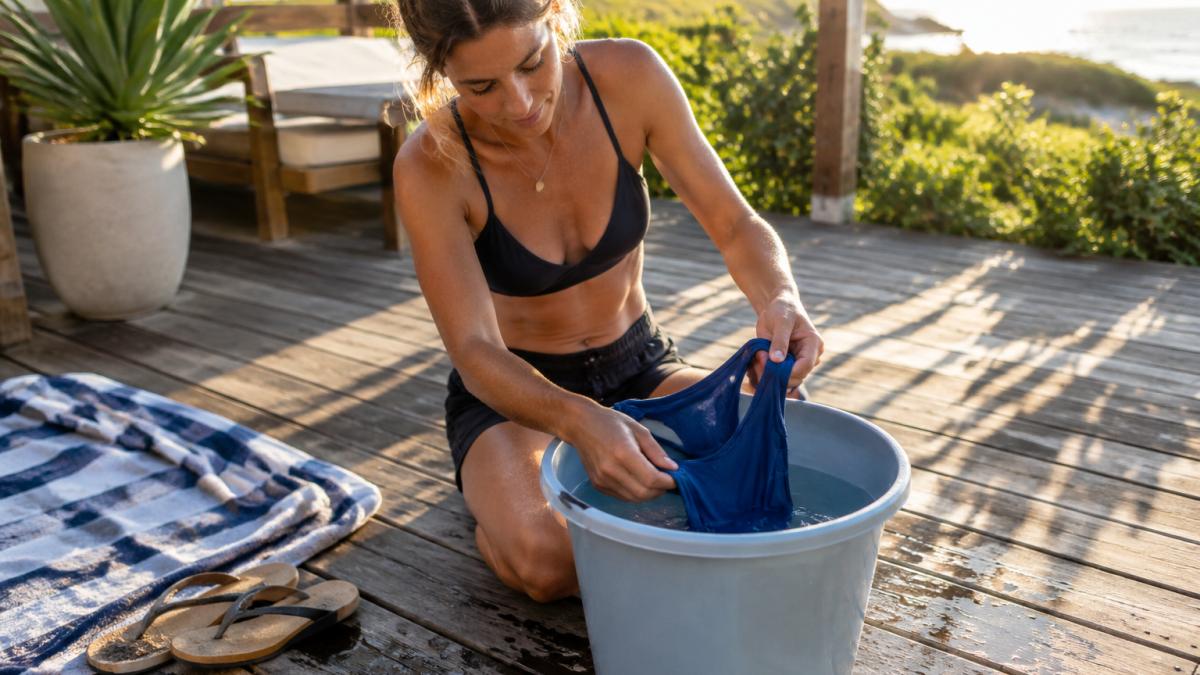
Rinse your swimsuit in cool fresh water within an hour of leaving the water. Salt residue left to dry works into the fibre and speeds up colour loss, so a quick rinse is the single most effective habit you can build.
Woman rinsing a blue swimsuit in a bucket of fresh water on a sunny timber deck with sandy thongs nearby
Follow these steps for how to wash a swimsuit after swimming:
Rinse in cool fresh water as soon as you can, within the hour is ideal, and before the suit dries is the real target. No detergent is needed for a light swim.
Hand wash with a small amount of mild soap if you have been in sunscreen, sweat or chlorinated water, working the soap through the fabric gently rather than scrubbing the surface.
Squeeze gently, never wring or twist, wringing stretches the elastane and opens the knit, which lets salt and grit deeper into the fibre next time.
Roll in a towel to lift excess water rather than leaving the suit heavy and dripping.
Dry flat in shade, away from direct sunlight, and never on a hot car roof or a metal balcony rail, both of which concentrate heat on one part of the fabric.
Why Each Step Matters for Salt Specifically
A fresh-water rinse dilutes and lifts the salt before it can crystallise, which is why timing matters more than technique. Mild soap is there for the sunscreen and body oils that trap salt against the fibre, not for the salt itself. Squeezing rather than wringing protects the elastane, because a stretched fibre lets salt crystals lodge deeper where a rinse cannot reach them.
How to Tell Whether Your Rinse Routine Is Working
Check the suit after it dries. A well-rinsed suit feels soft and smells of nothing much; a suit that was not rinsed thoroughly feels slightly stiff, may show a faint white bloom at the seams, and can smell of the sea even when dry.
Watch out: leaving a wet, salty suit balled in a bag or in the boot of a car overnight is the single fastest way to set salt into the fibre, because the warm, damp environment keeps the salt in solution and drives it deeper before it can be rinsed away.
How to Care for a One-Piece Swimsuit So It Lasts
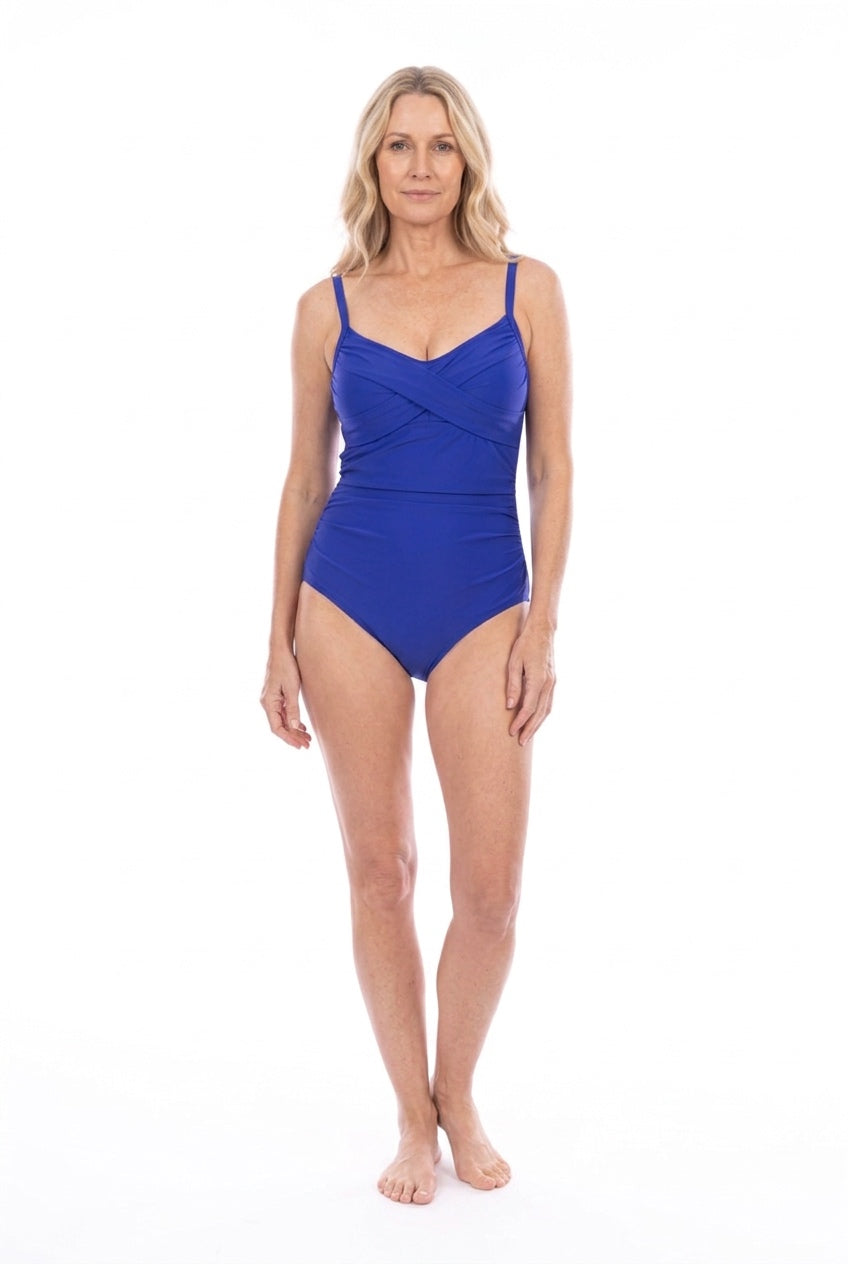
Cold wash and line dry in shade is the routine that keeps a one-piece holding its shape and colour longest. A one-piece carries more continuous stretch than a two-piece, so heat and hanging both shorten its life. Never tumble dry, never leave it balled in a bag, and never hang it by the straps, which stretch them out.
Choosing Your Next Saltwater-Ready Piece from SBYT
Look for polyester-rich fabric and double stitching. The Blue Ripple BoardShorts are made from a polyester and elastane blend and have a relaxed fit. Browse the swim range to find a piece that suits how you actually swim.
Saltwater doesn't have to mean a swimsuit that fades by February. Choose the right fibre, rinse after every swim, and dry in shade, and you will get far more summers out of each piece.
Frequently Asked Questions
Does saltwater make swimsuits fade?
Saltwater alone is a mild factor in fading, but it speeds up wear when combined with UV exposure and sunscreen. Salt crystals left to dry in the fabric abrade fibres and weaken elastane over time, and repeated soaking without rinsing lets salt residue build up. Rinsing in fresh water after every ocean swim is the single most effective habit for limiting saltwater fading and keeping colour intact.
What swimsuit fabric is most resistant to saltwater fading?
PBT and polyester hold colour and shape better in seawater than standard nylon and elastane blends. PBT is chlorine-resistant and keeps its colour well, while polyester resists UV degradation. Nylon and elastane feel softer and stretch more but break down faster with salt, sun and chlorine. For frequent ocean swimming, look for a high polyester or PBT content with a modest elastane percentage for fit.
Should I rinse my swimsuit after swimming in the sea?
Yes. Rinse in cool fresh water within an hour of leaving the water. Salt residue, sand and sunscreen sit in the fibres and continue working on the fabric as it dries. A quick rinse, a gentle squeeze without wringing, and drying flat in the shade removes most of what causes saltwater fading and thinning. Never leave a wet swimsuit rolled in a towel or bag.
How often should you replace a swimsuit worn in saltwater?
A well-cared-for swimsuit used regularly in the sea typically lasts one to two seasons before stretch, colour and support start to go. Signs to replace it include sagging at the seat, thinning fabric that turns see-through when wet, and colour that has faded unevenly. Rinsing after every swim and drying in shade can push a good-quality piece closer to the two-season mark.